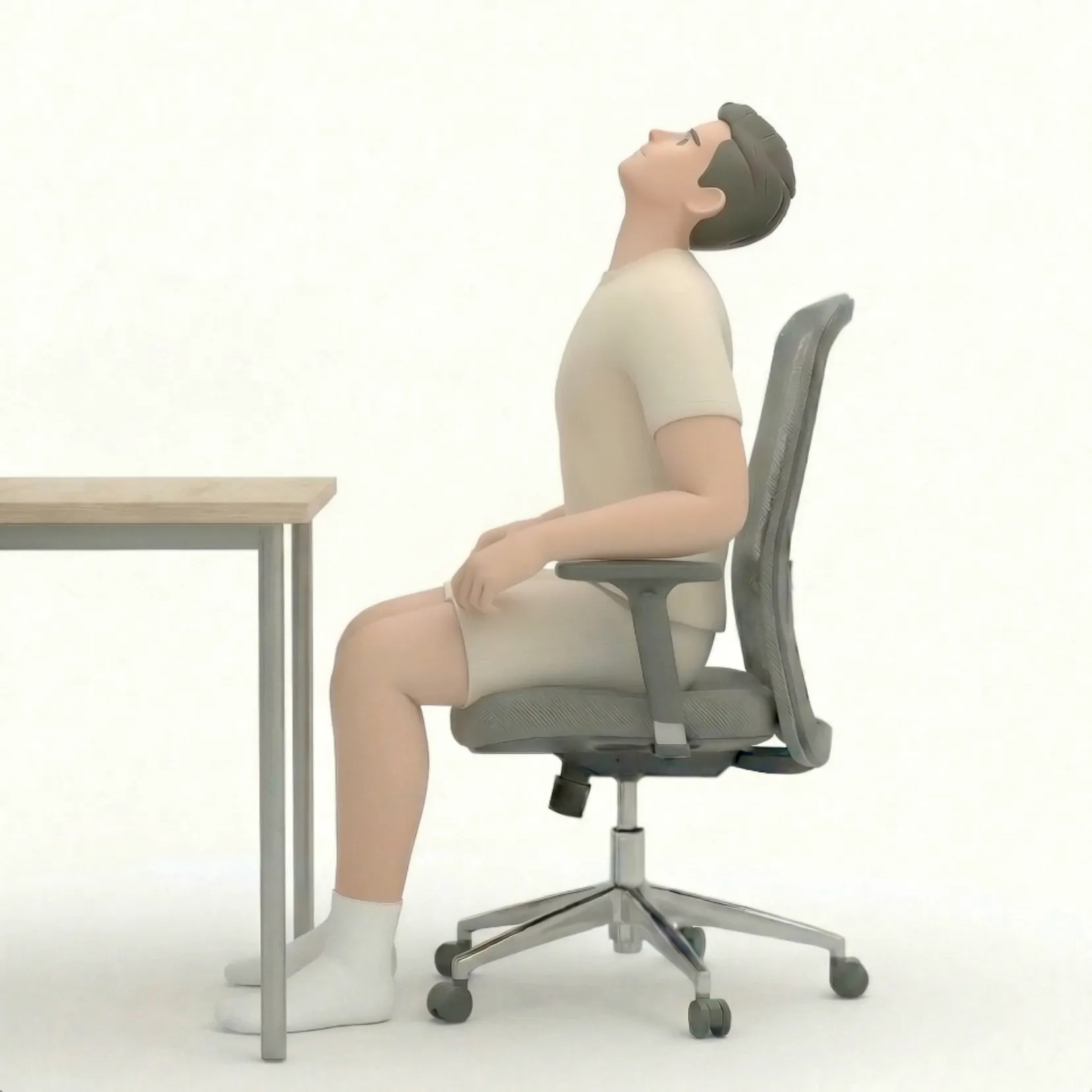
1. Desk Neck Look Up
15sA seated cervical extension stretch that gently opens the front of the neck and counteracts the forward-head posture commonly developed during desk work.
StretchNeckMobilityPosture
A comprehensive head-to-toe sequence that touches every major muscle group, ideal for a complete daily practice.
A seated cervical extension stretch that gently opens the front of the neck and counteracts the forward-head posture commonly developed during desk work.
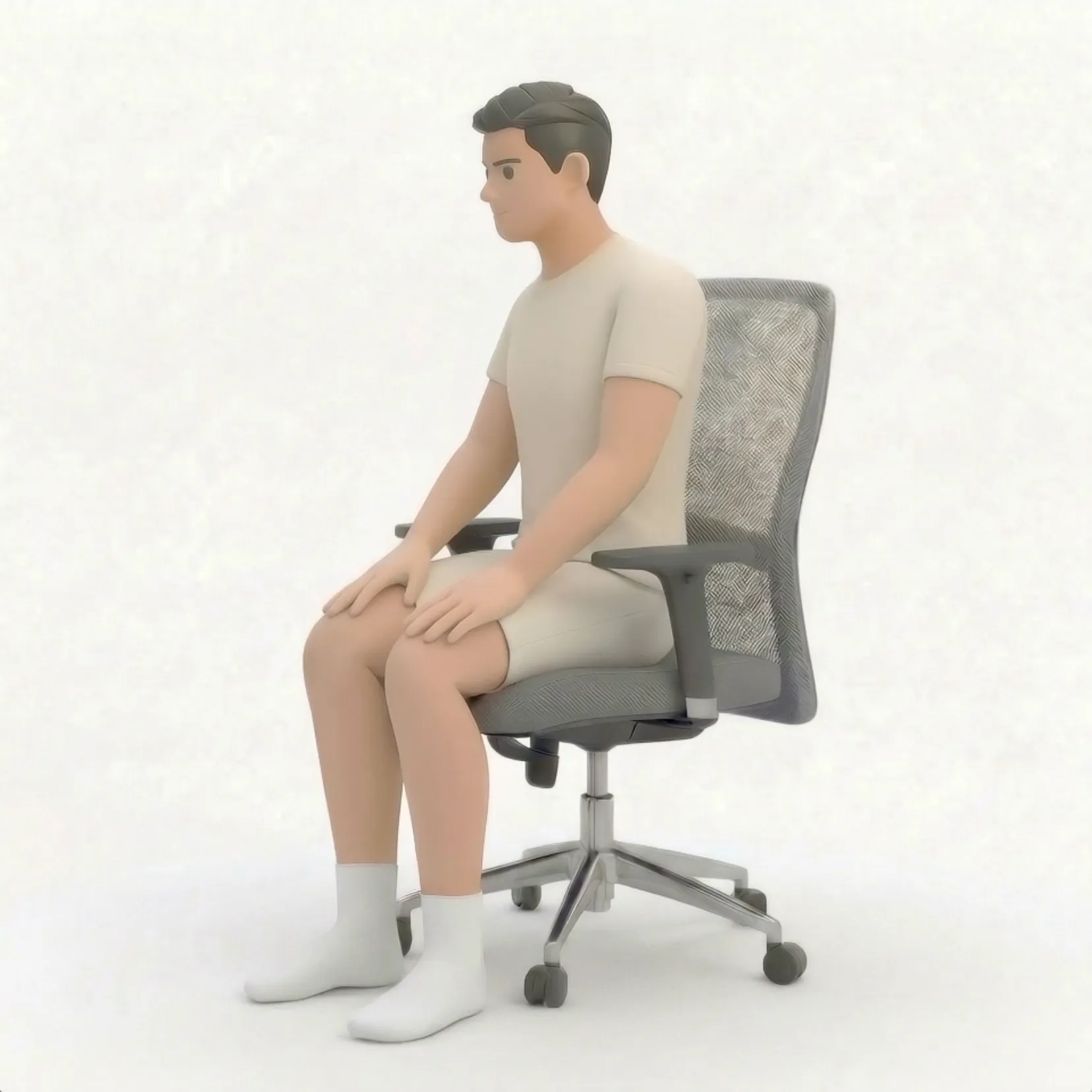
A seated upper trapezius exercise that involves elevating and releasing the shoulders to relieve neck and shoulder tension accumulated from desk work.
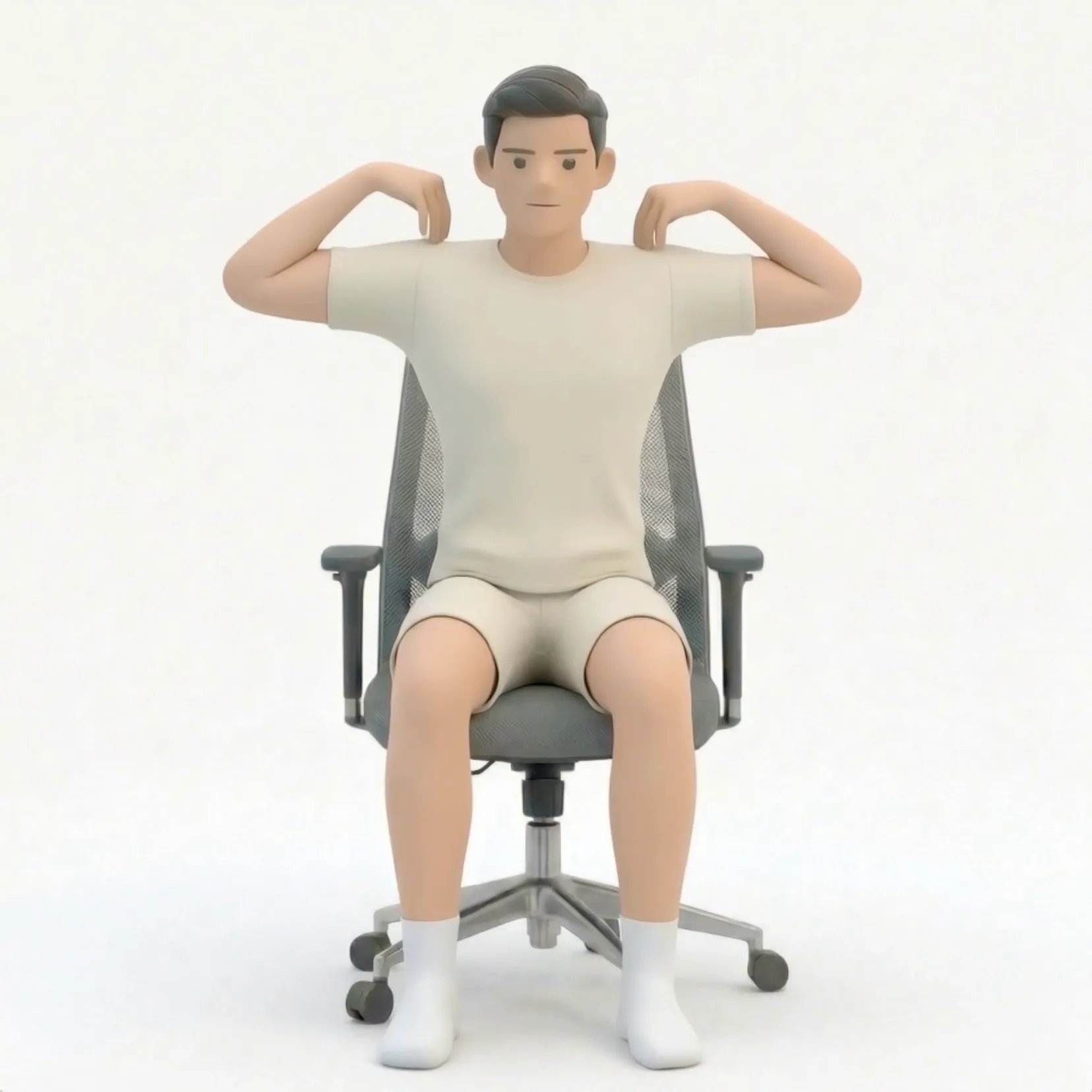
A seated shoulder mobility exercise where the hands rest on the shoulders and the elbows trace large circles, lubricating the shoulder joint and relieving upper back stiffness.
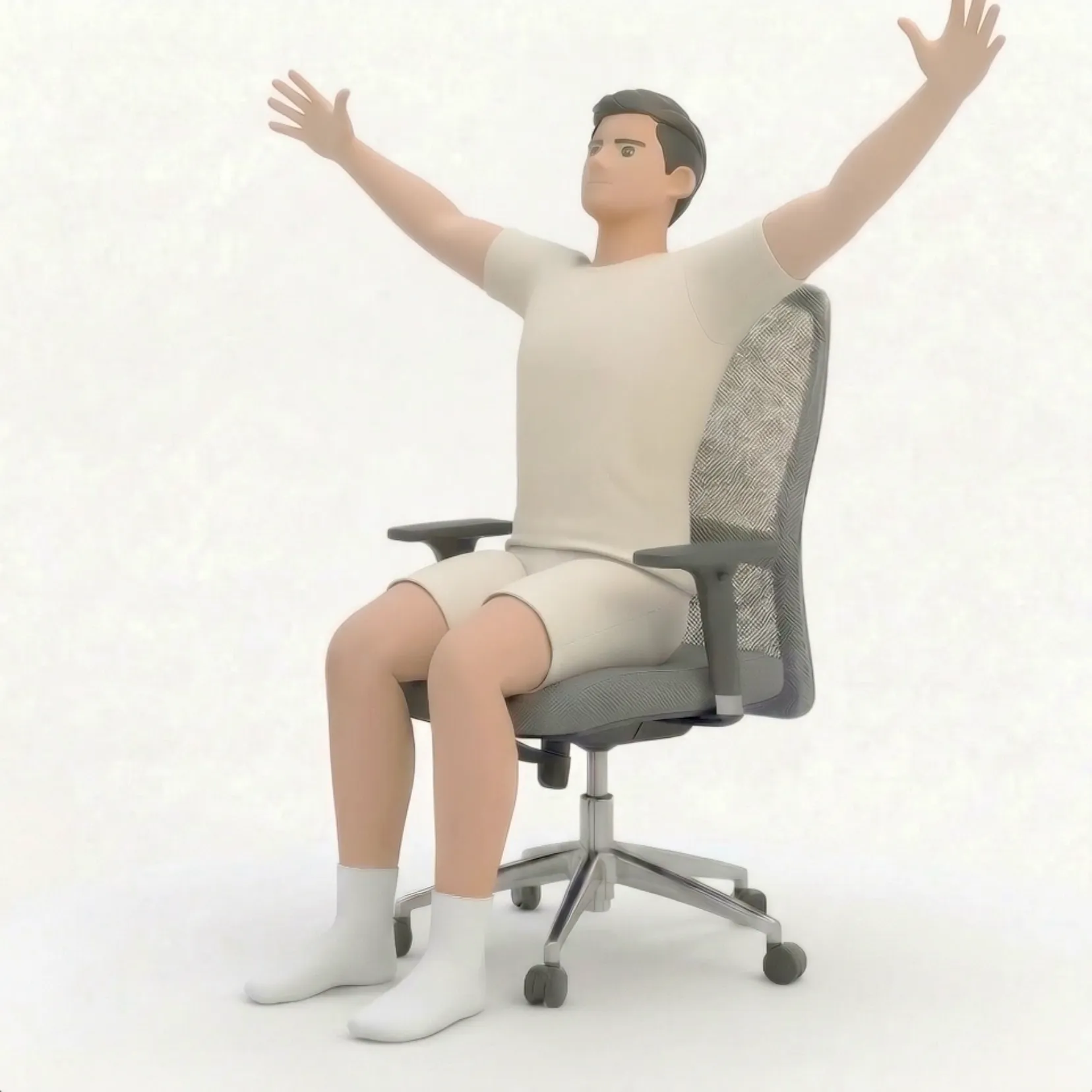
A seated chest and shoulder stretch that counteracts the rounded-shoulder posture from typing, opening the chest and drawing the shoulder blades together.
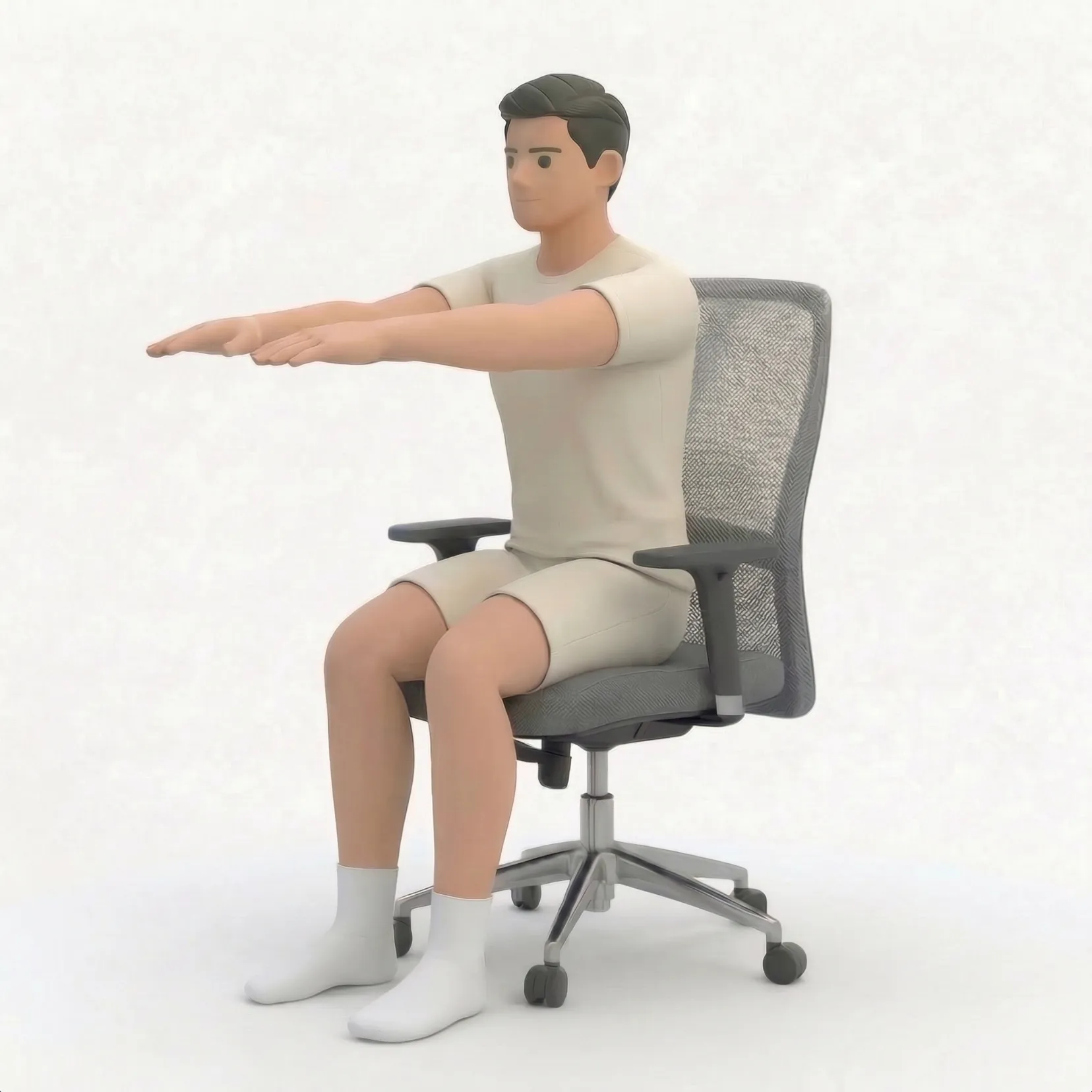
A seated overhead and thoracic extension stretch that lifts the arms overhead and gently arches the upper back to decompress the spine and open the chest.
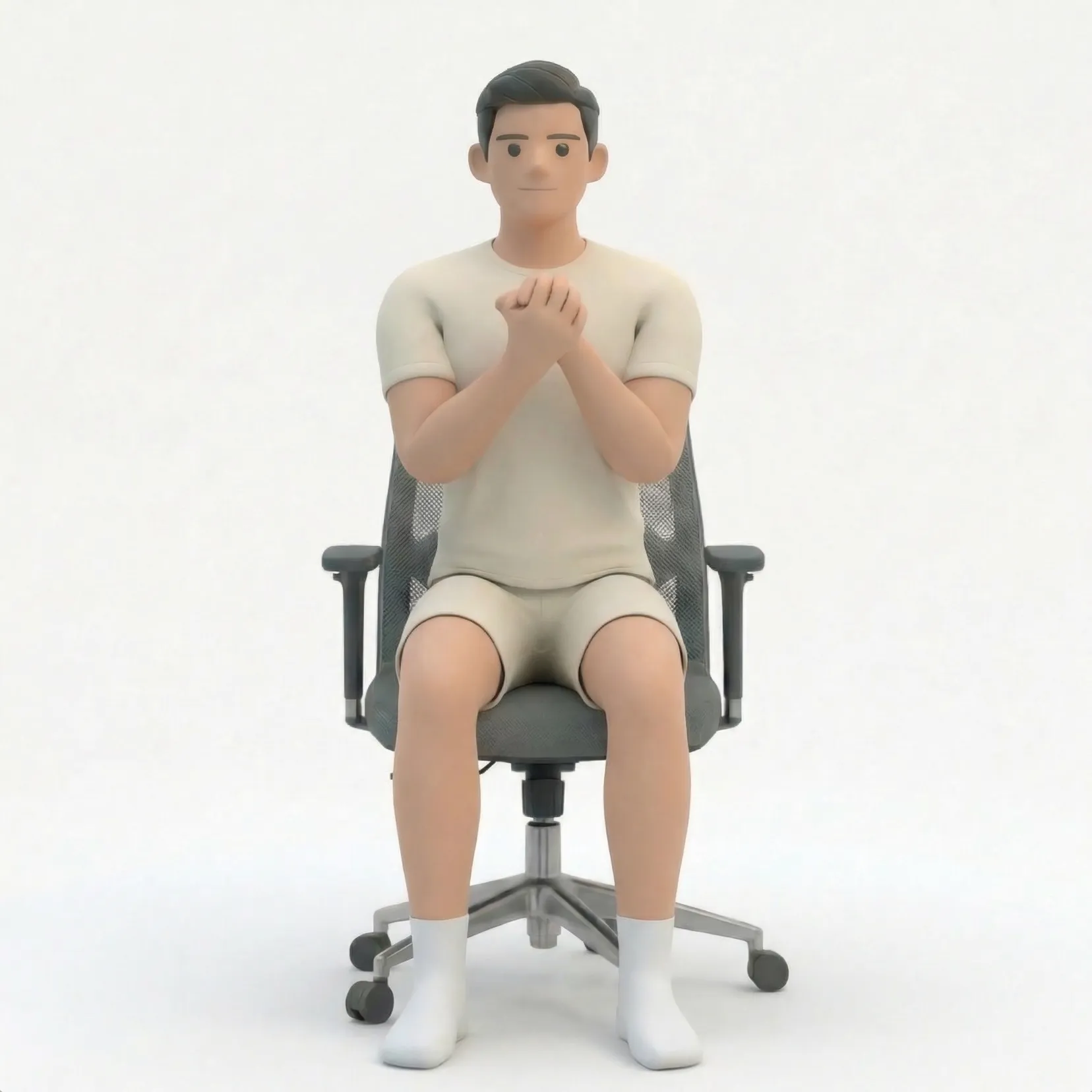
A seated wrist mobility exercise where the interlocked fingers rotate in circles to improve wrist joint range of motion and relieve forearm tension from typing.
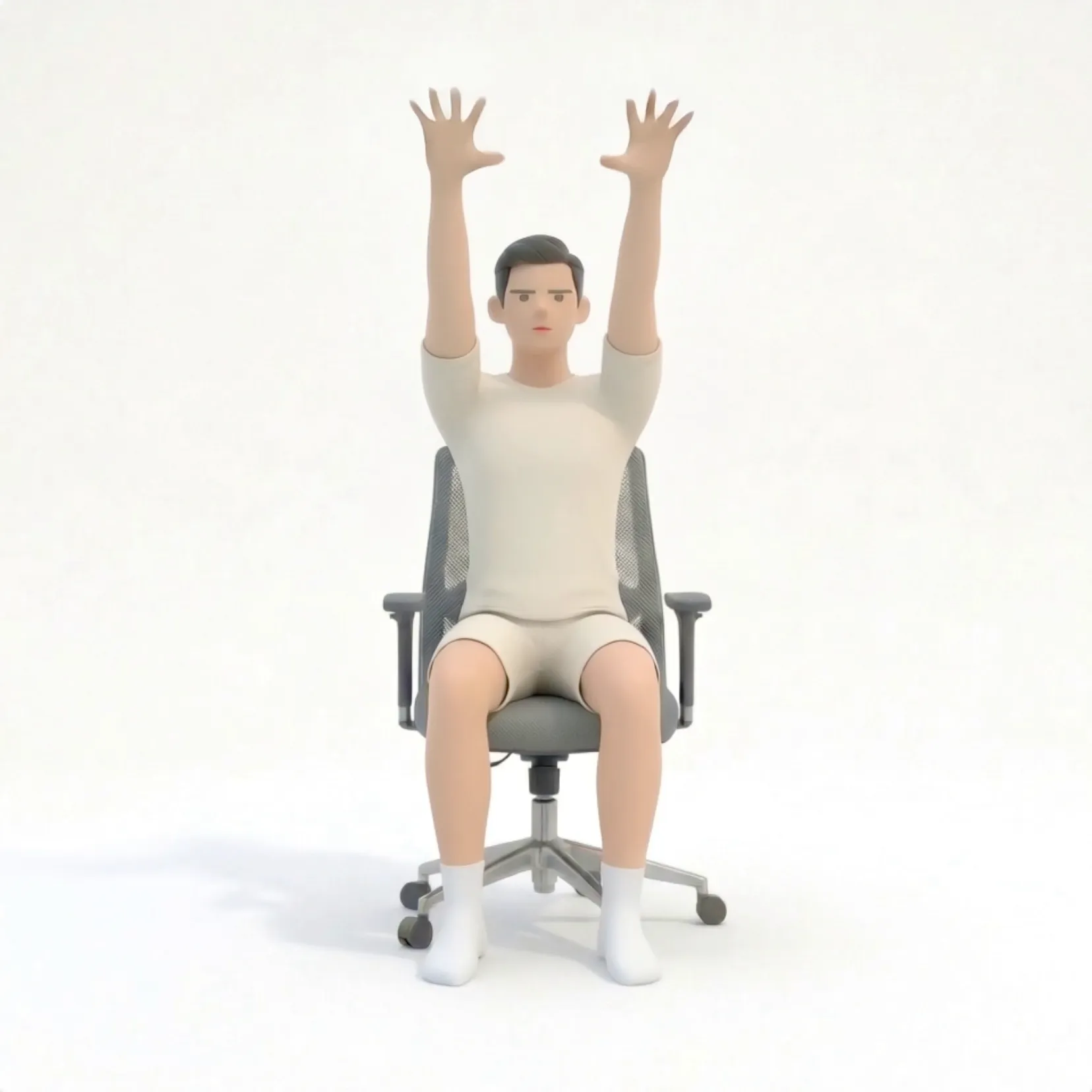
A seated hand and forearm stretch that extends the fingers wide to relieve tension from prolonged keyboard and mouse use, reducing the risk of repetitive strain.
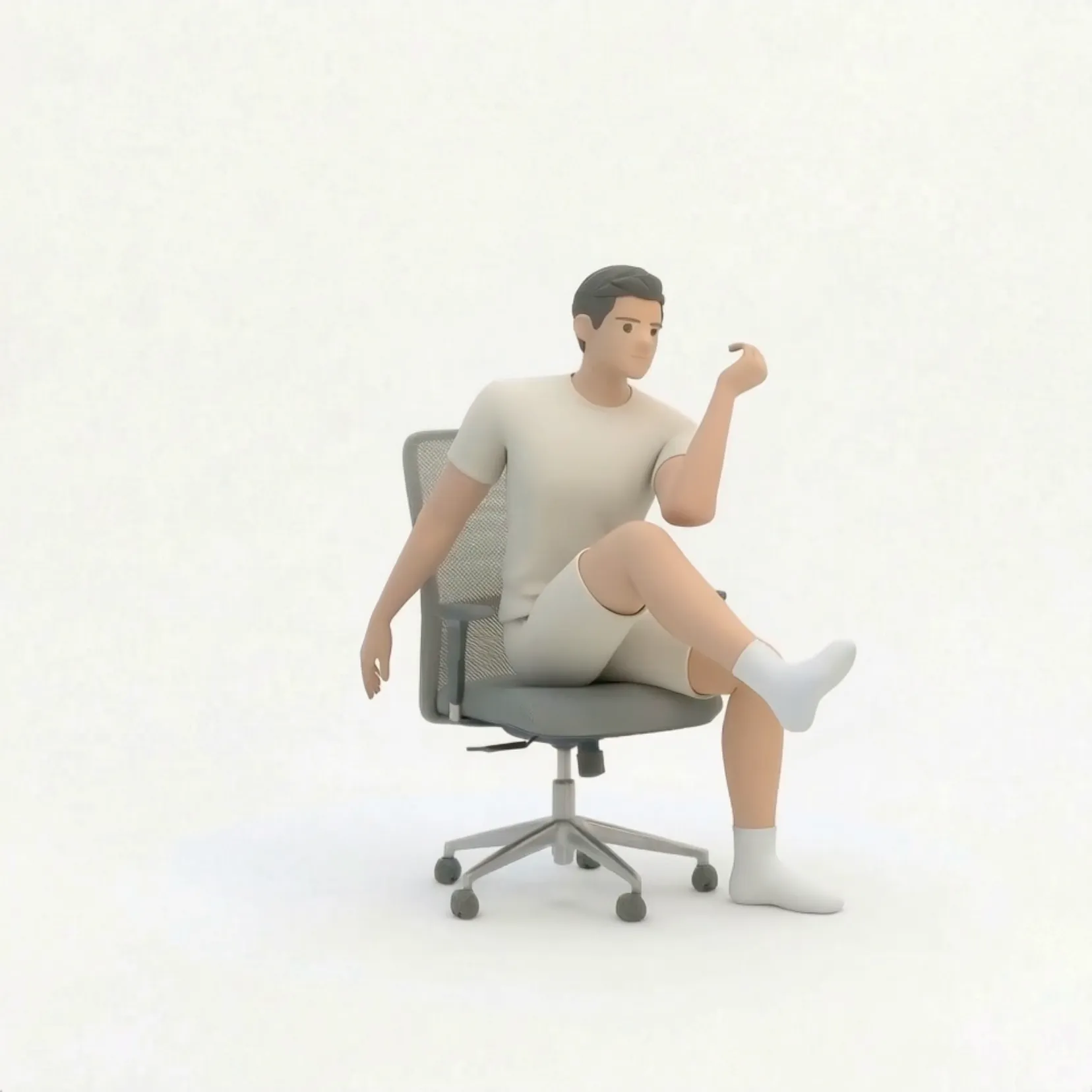
A seated core and oblique exercise that alternately brings each knee toward the opposite elbow, activating the abdominals and improving rotational mobility.
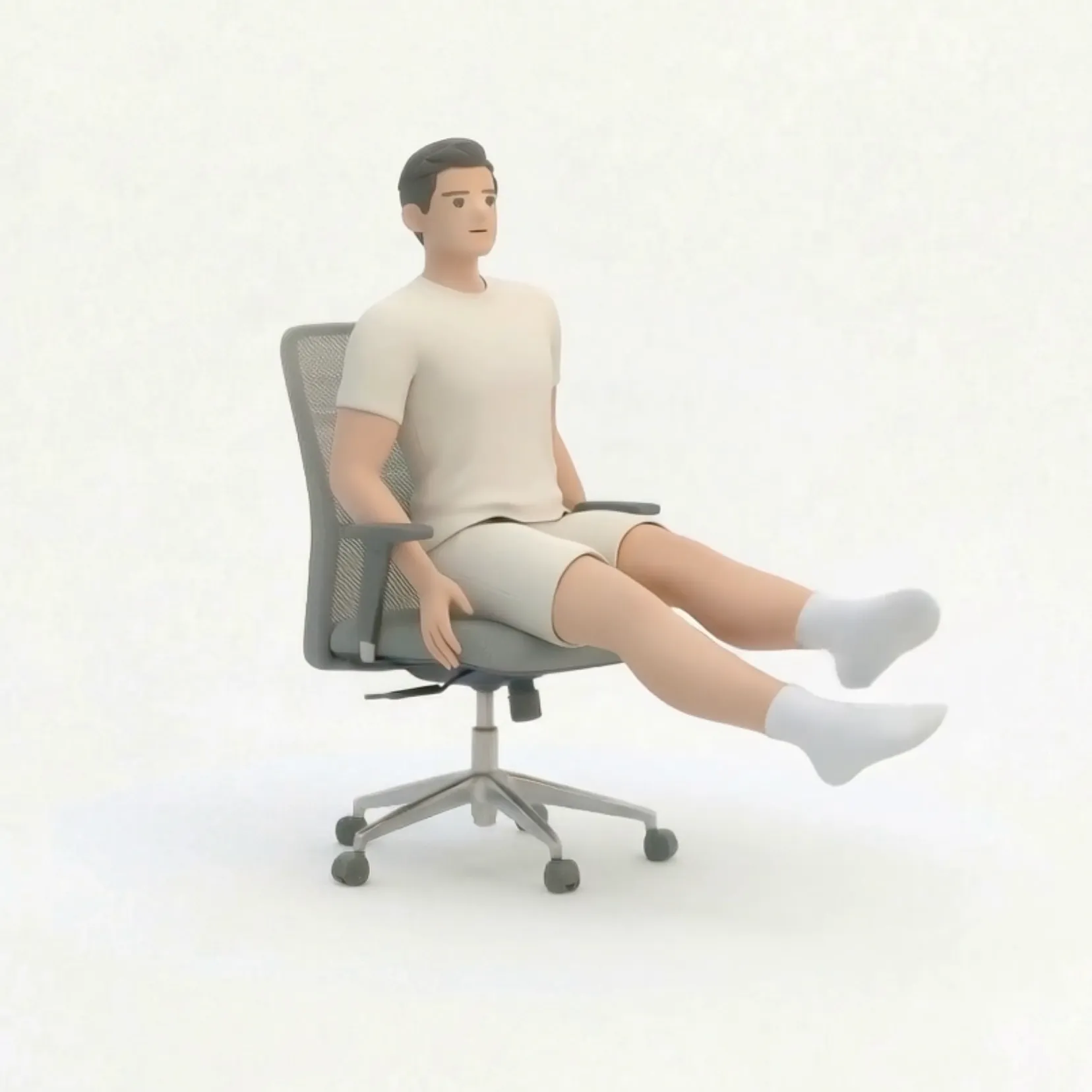
A seated core and hip flexor exercise where both legs are extended and crossed alternately in a scissoring motion, challenging the abdominals and improving leg circulation.
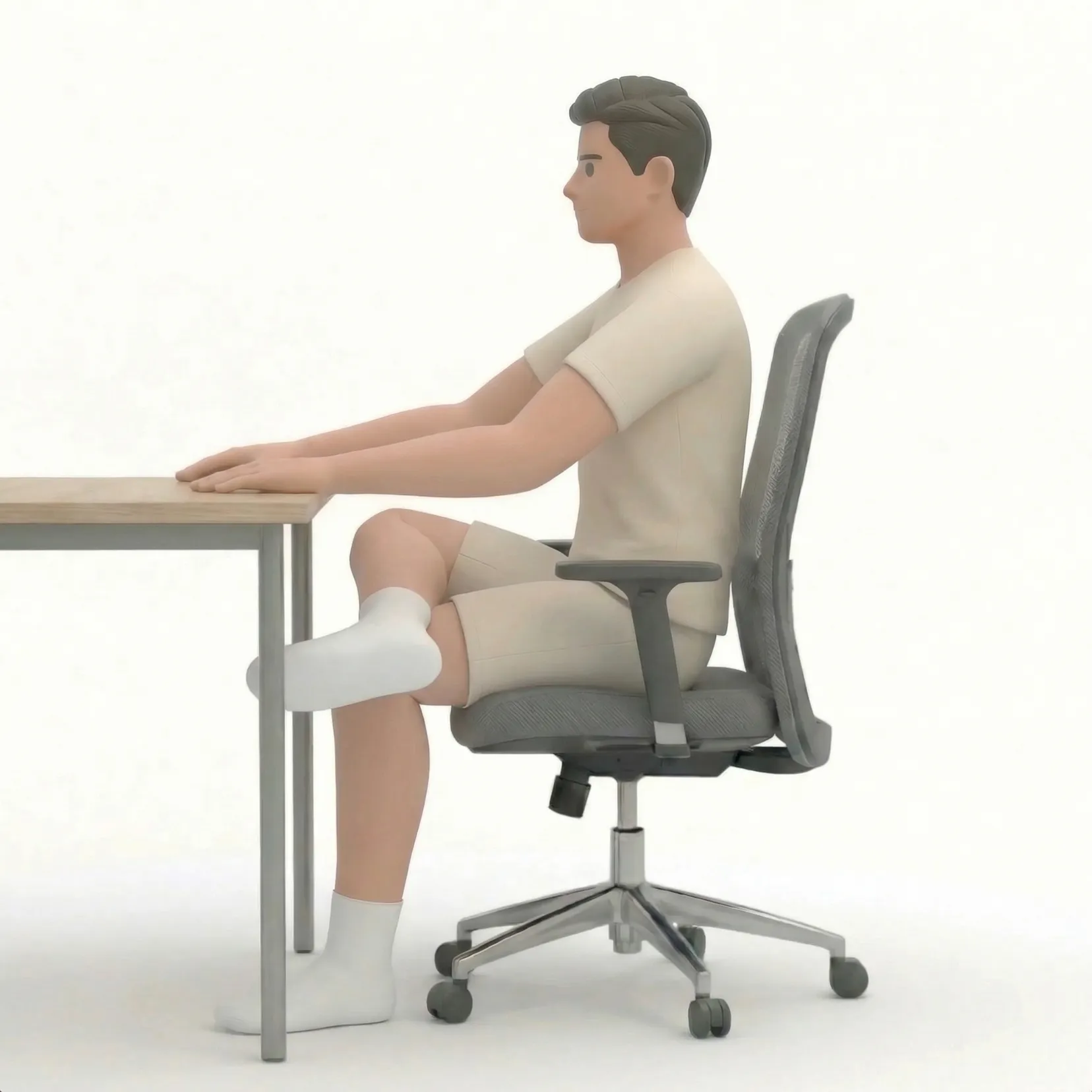
A seated piriformis and outer hip stretch performed at the desk, targeting the glutes and hip rotators to relieve the deep hip tightness caused by prolonged sitting.
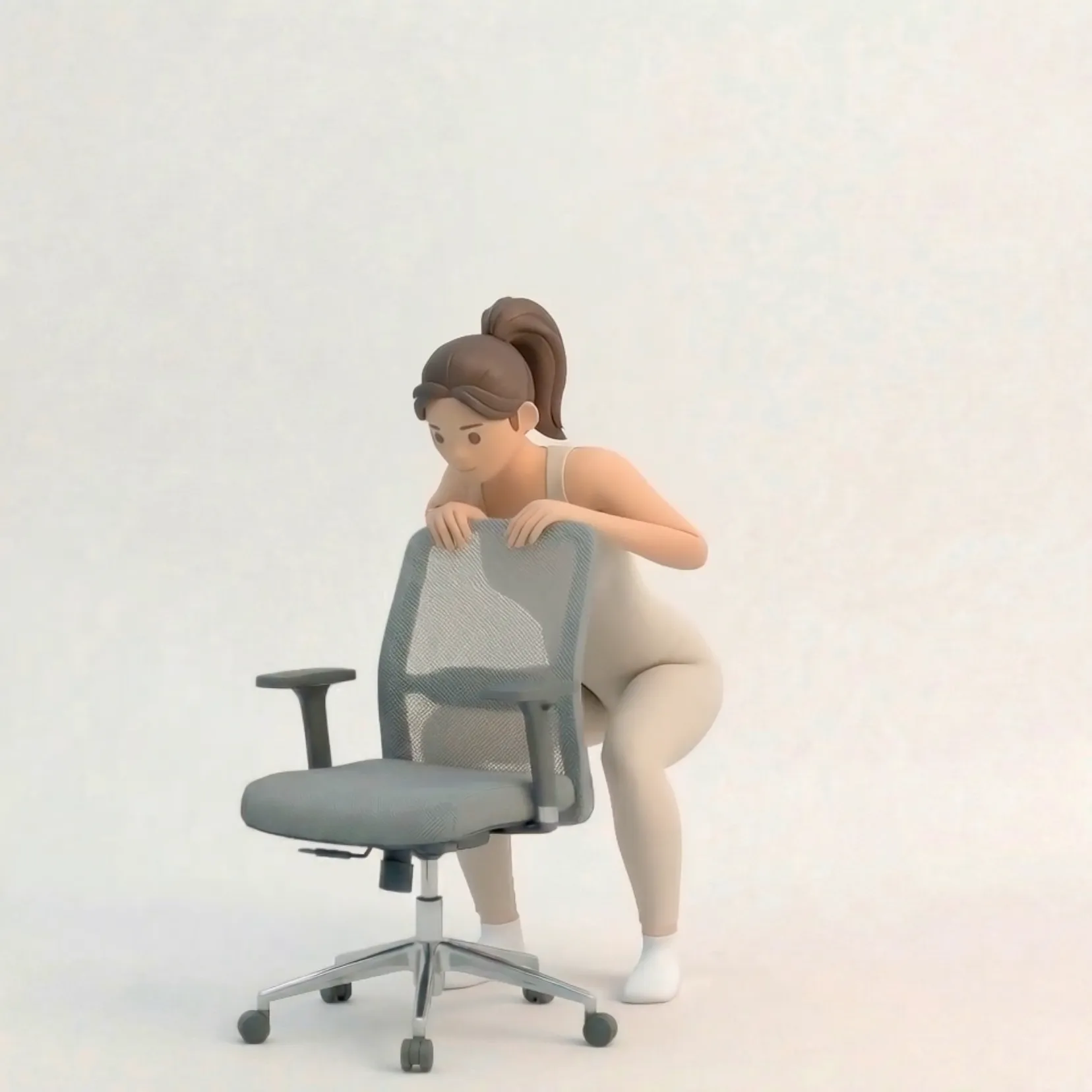
A lower-body strengthening exercise using a chair for support, targeting the quads, hamstrings, and glutes — perfect for building leg strength without equipment.
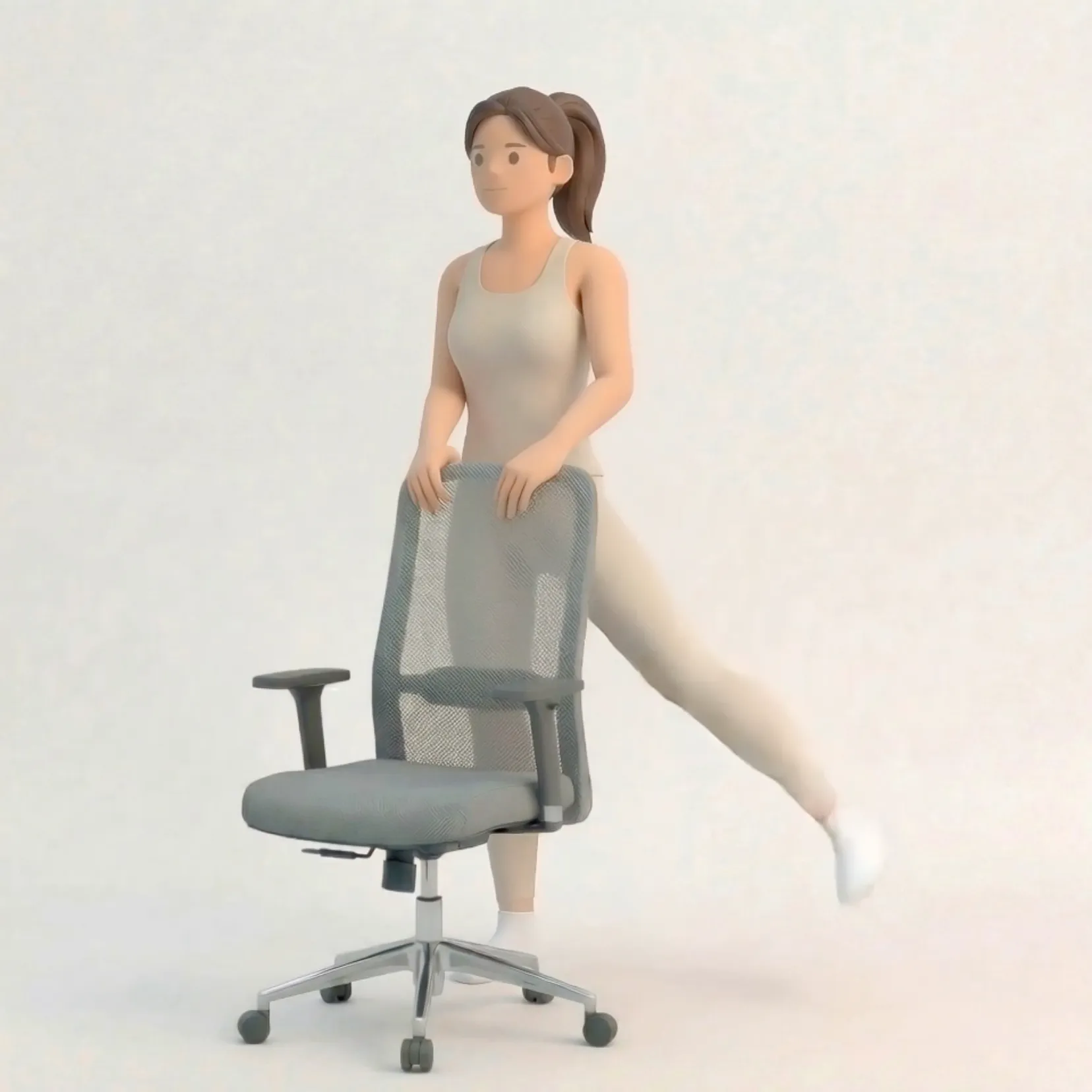
A standing balance and hip-strengthening exercise using a chair for support, ideal for activating the glutes and outer hips after long periods of sitting.
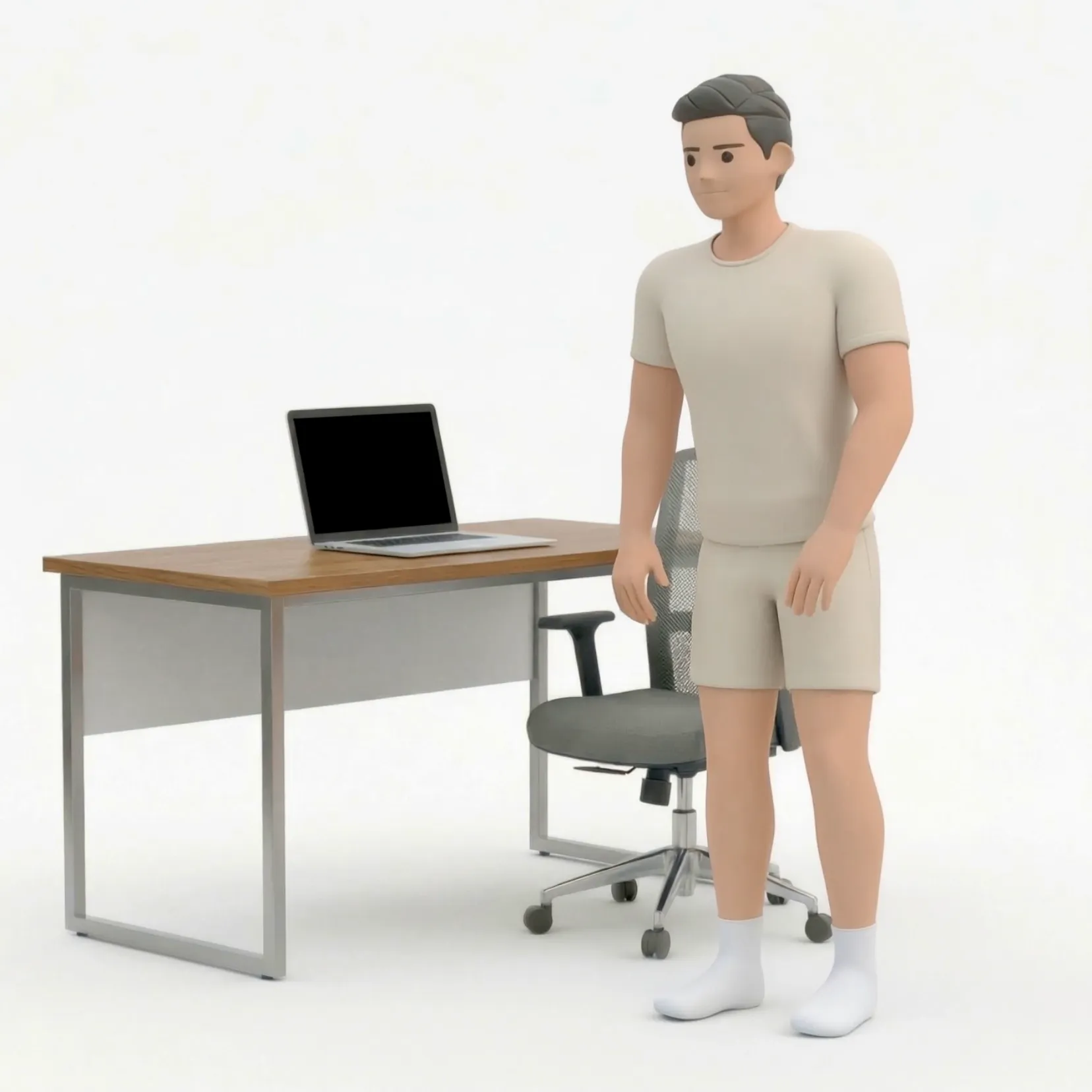
A standing latissimus dorsi and upper back stretch using the desk for support, where the torso hinges forward and the arms extend to create a deep elongation of the back muscles.
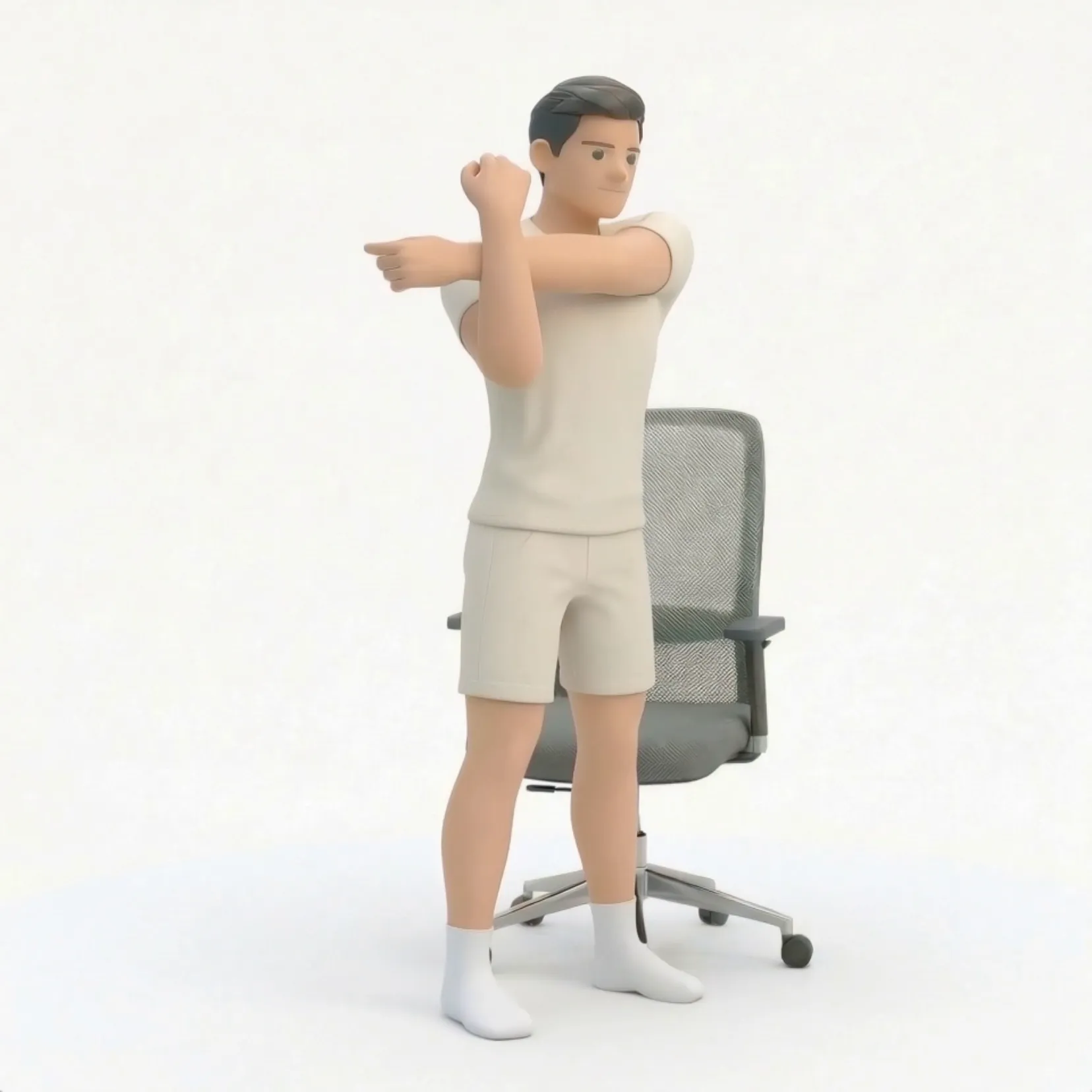
A standing cross-body shoulder stretch that pulls one arm across the chest to target the posterior deltoid and upper back, relieving shoulder tightness from desk work.
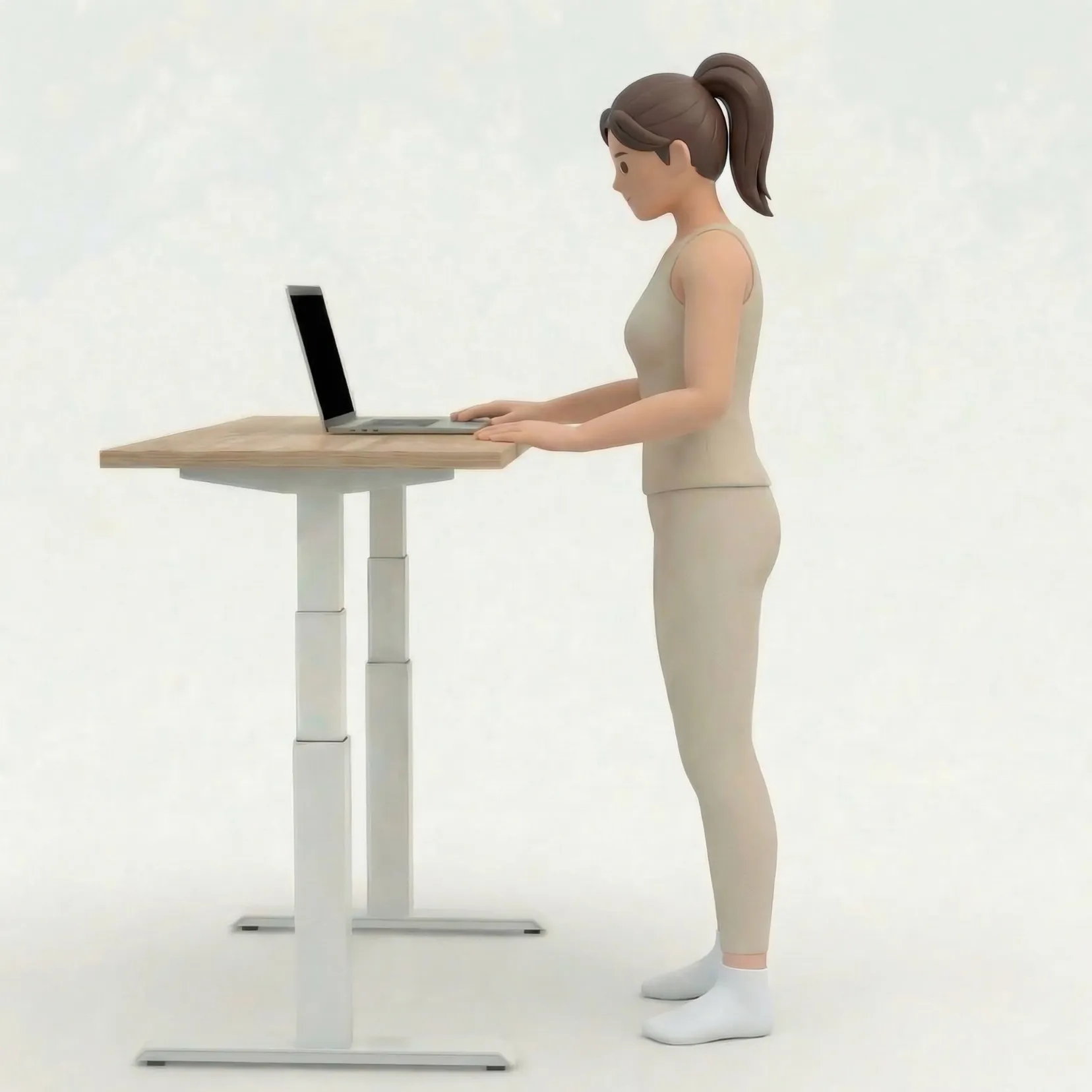
A standing quadriceps stretch using the desk for balance support, where one heel is pulled toward the glutes to stretch the front of the thigh.
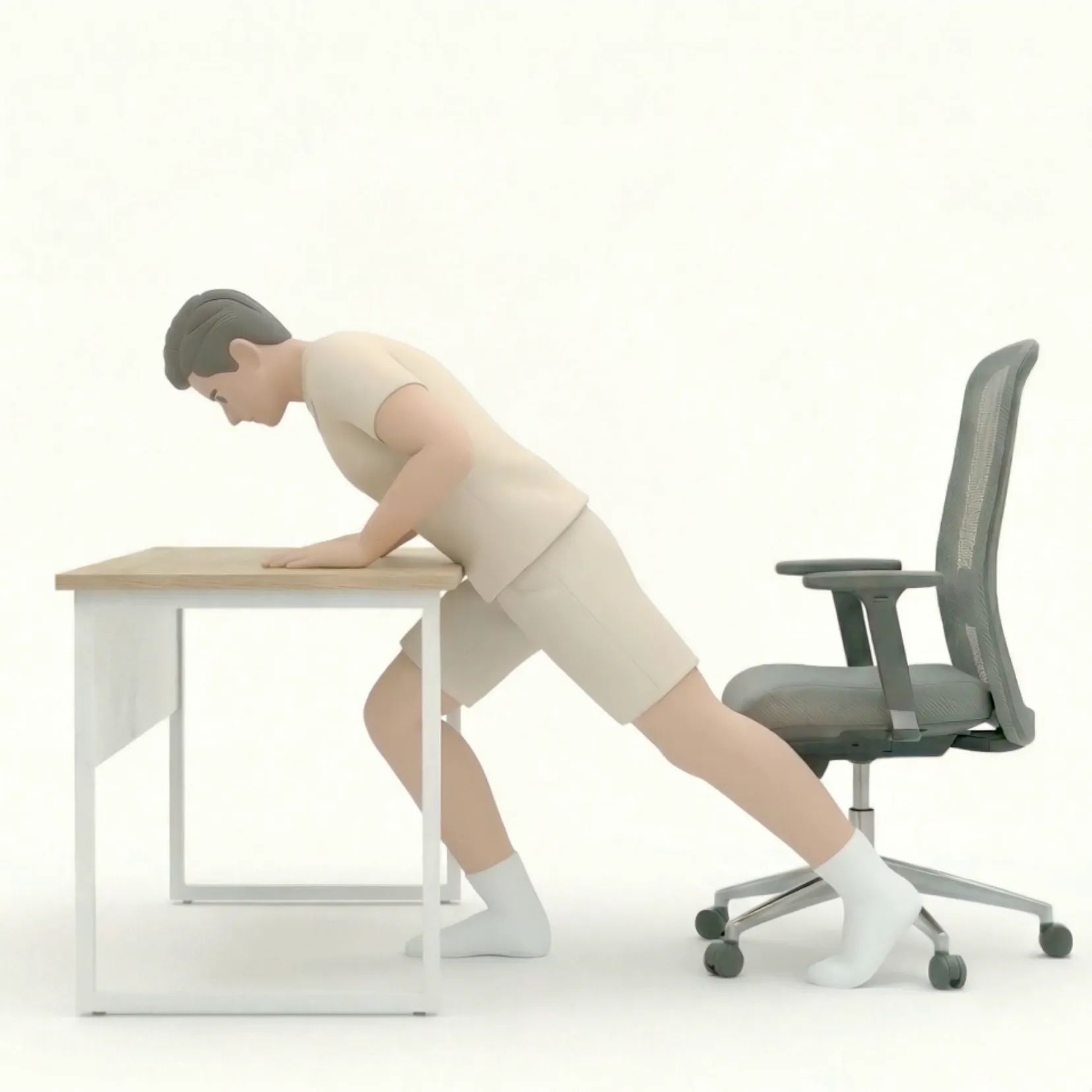
A standing calf stretch using the desk for support, targeting the gastrocnemius and soleus muscles to relieve tightness from sitting or standing for extended periods.
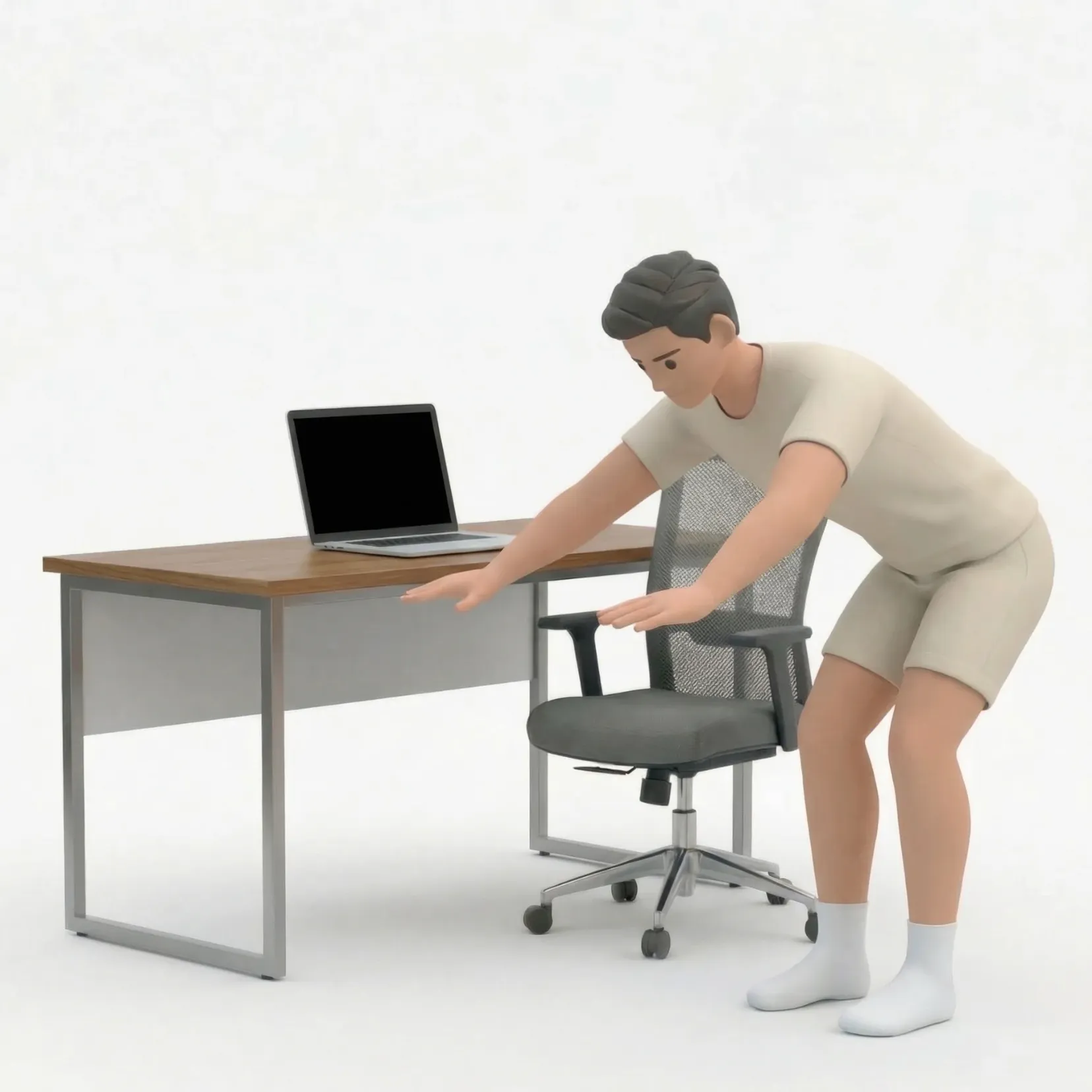
A standing thoracic and shoulder stretch using the desk for support, where the torso hinges forward and the upper back rounds to decompress the spine and stretch the entire posterior chain.