
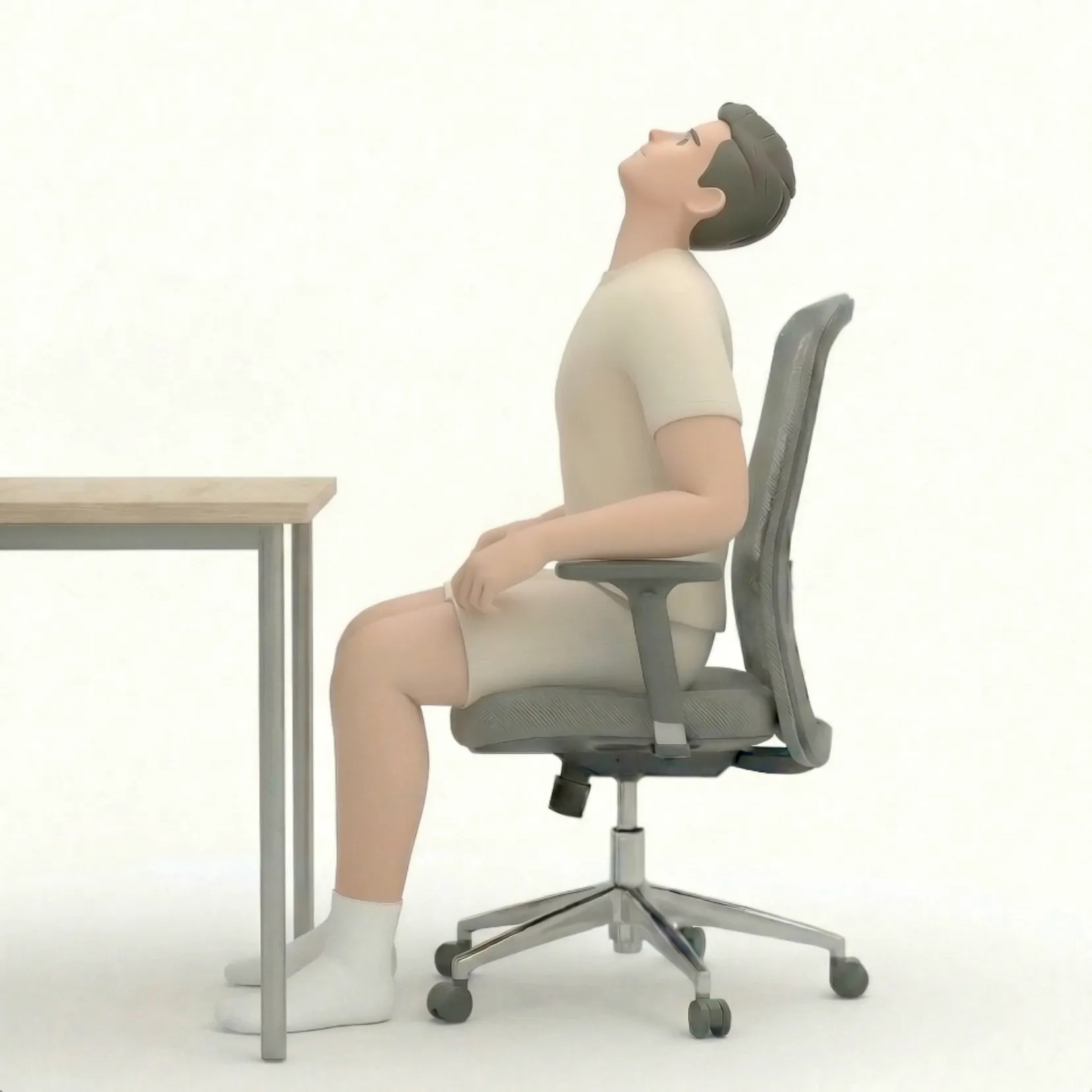
1. Desk Neck Look Up
15sA seated cervical extension stretch that gently opens the front of the neck and counteracts the forward-head posture commonly developed during desk work.
StretchNeckMobilityPosture
Targeted relief for the neck, shoulders, chest, and upper back — the zones most stressed by typing and screen time.
A seated cervical extension stretch that gently opens the front of the neck and counteracts the forward-head posture commonly developed during desk work.
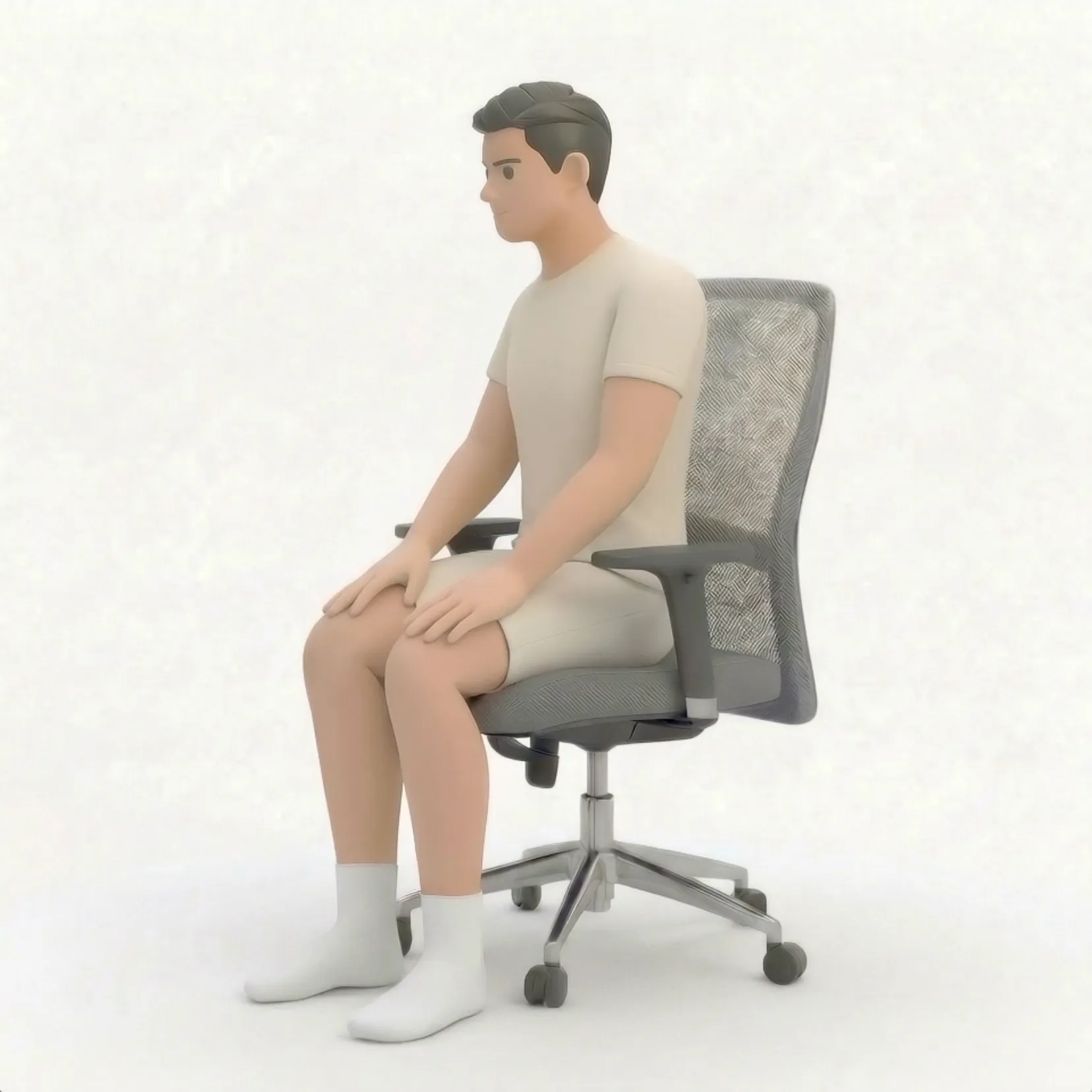
A seated upper trapezius exercise that involves elevating and releasing the shoulders to relieve neck and shoulder tension accumulated from desk work.
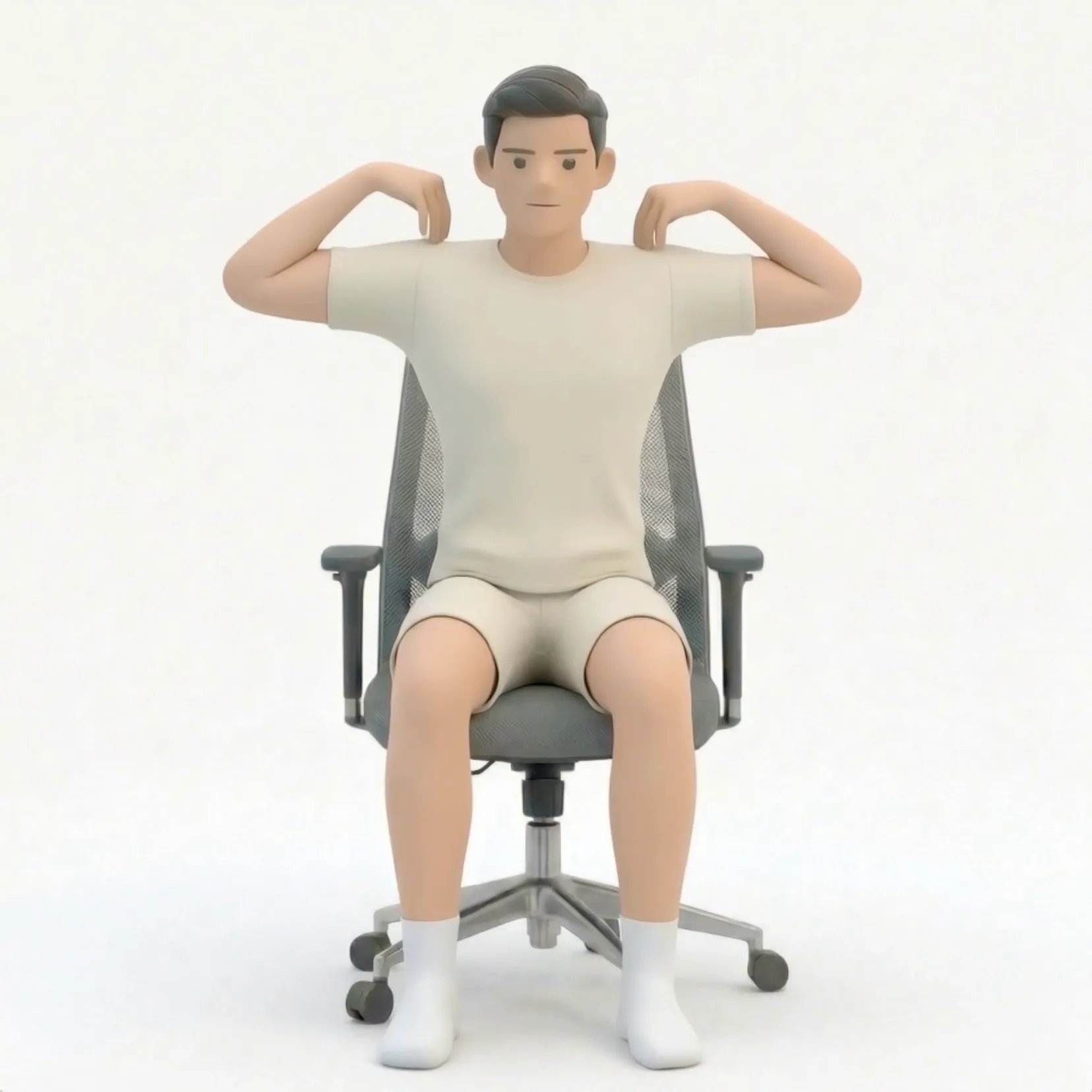
A seated shoulder mobility exercise where the hands rest on the shoulders and the elbows trace large circles, lubricating the shoulder joint and relieving upper back stiffness.
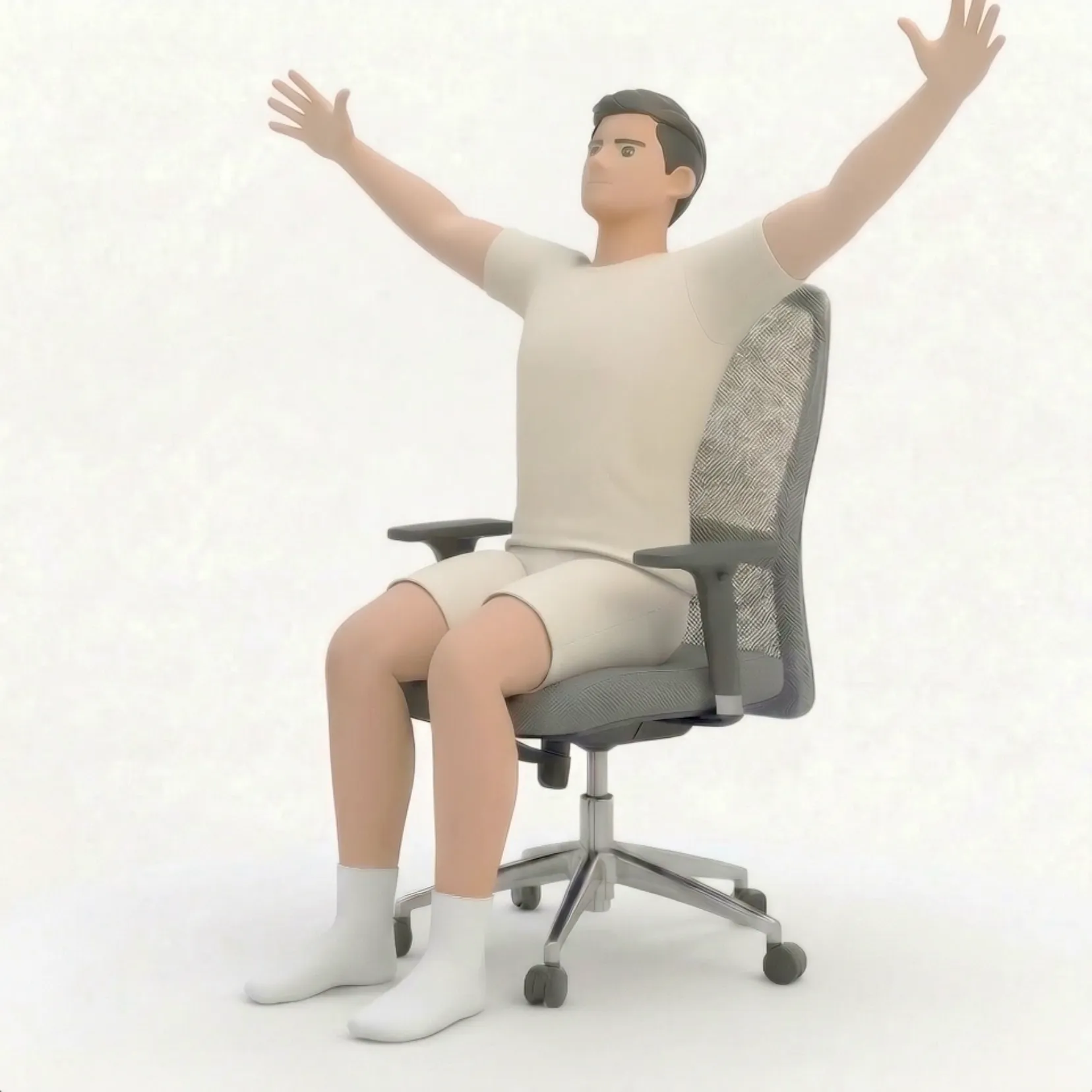
A seated chest and shoulder stretch that counteracts the rounded-shoulder posture from typing, opening the chest and drawing the shoulder blades together.
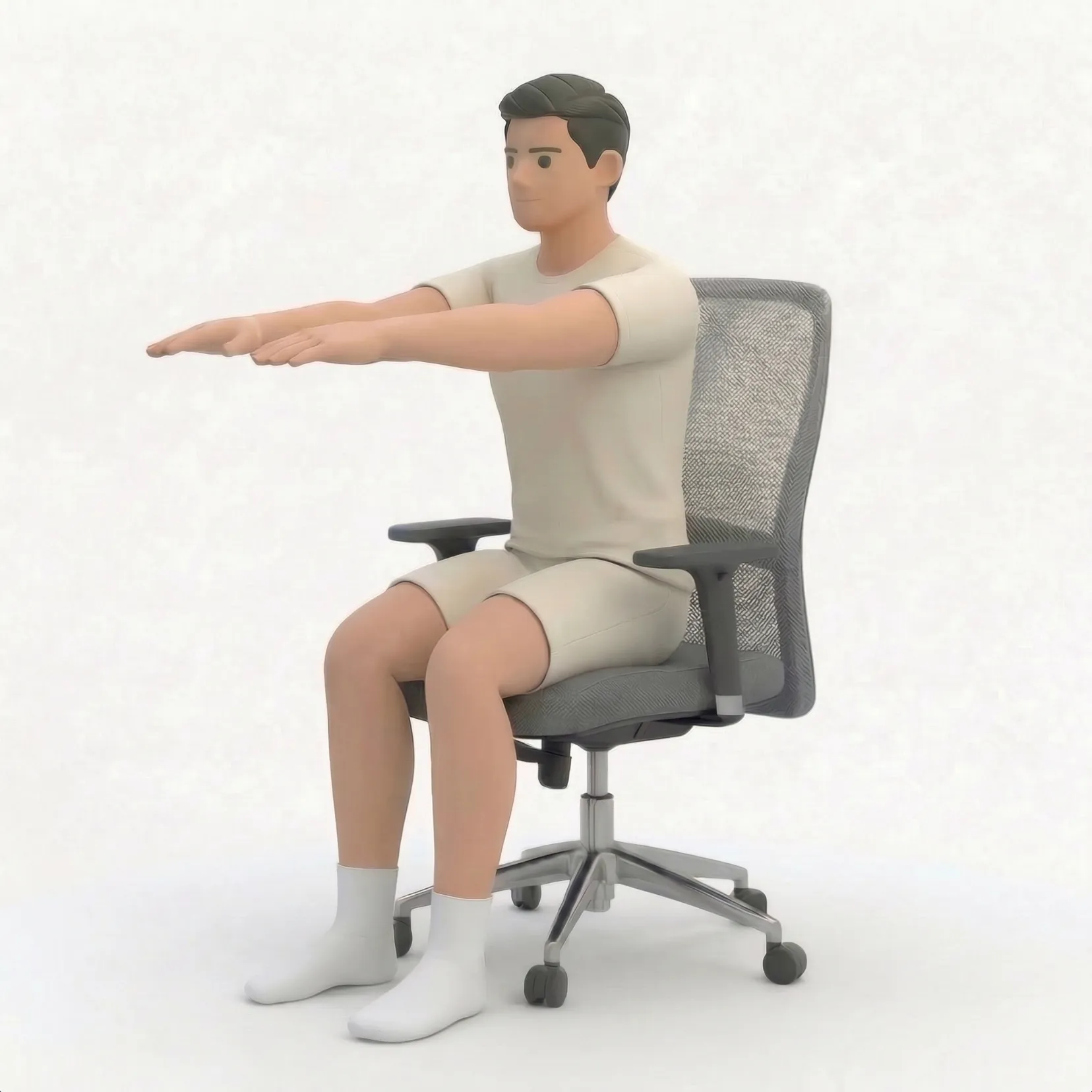
A seated overhead and thoracic extension stretch that lifts the arms overhead and gently arches the upper back to decompress the spine and open the chest.
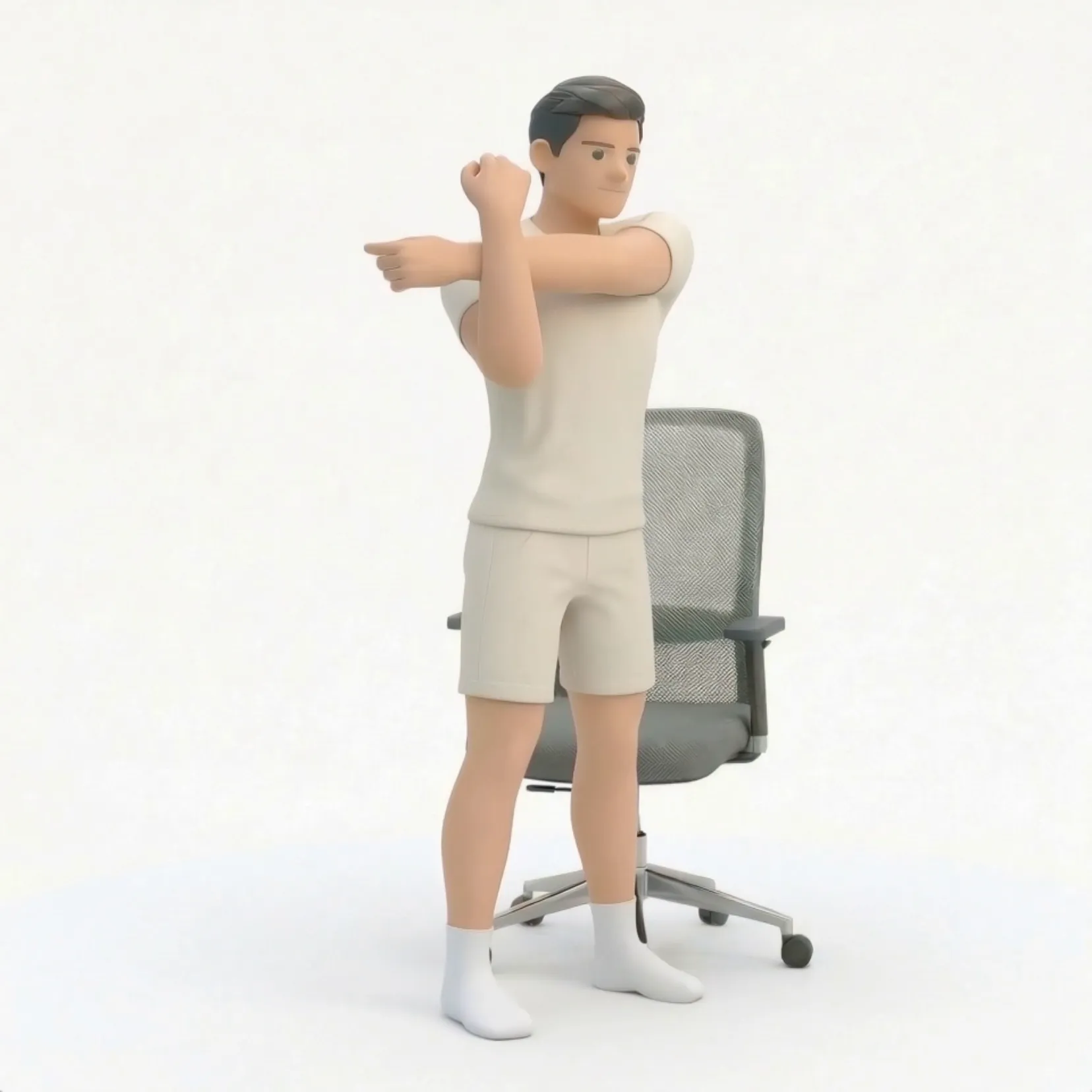
A standing cross-body shoulder stretch that pulls one arm across the chest to target the posterior deltoid and upper back, relieving shoulder tightness from desk work.
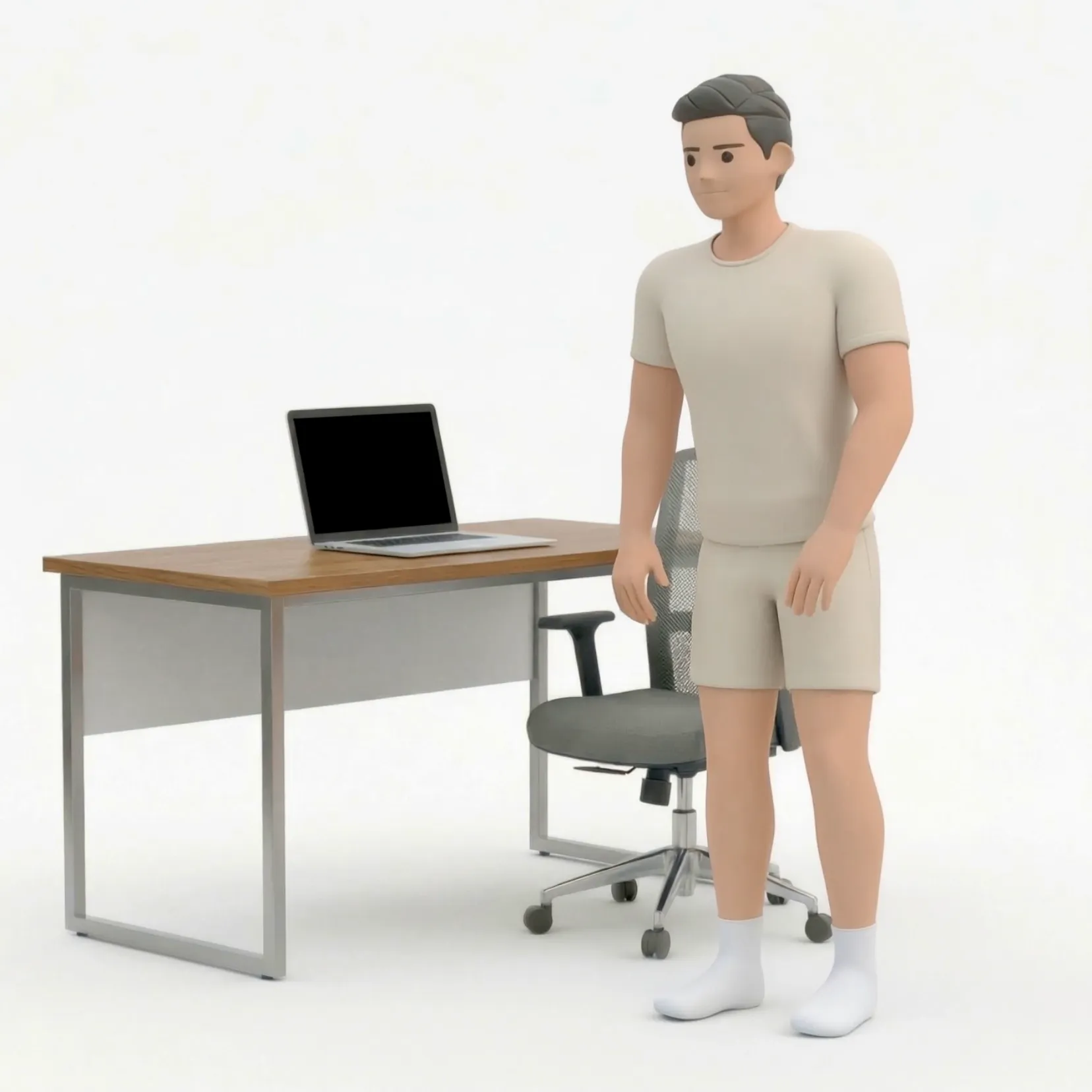
A standing latissimus dorsi and upper back stretch using the desk for support, where the torso hinges forward and the arms extend to create a deep elongation of the back muscles.
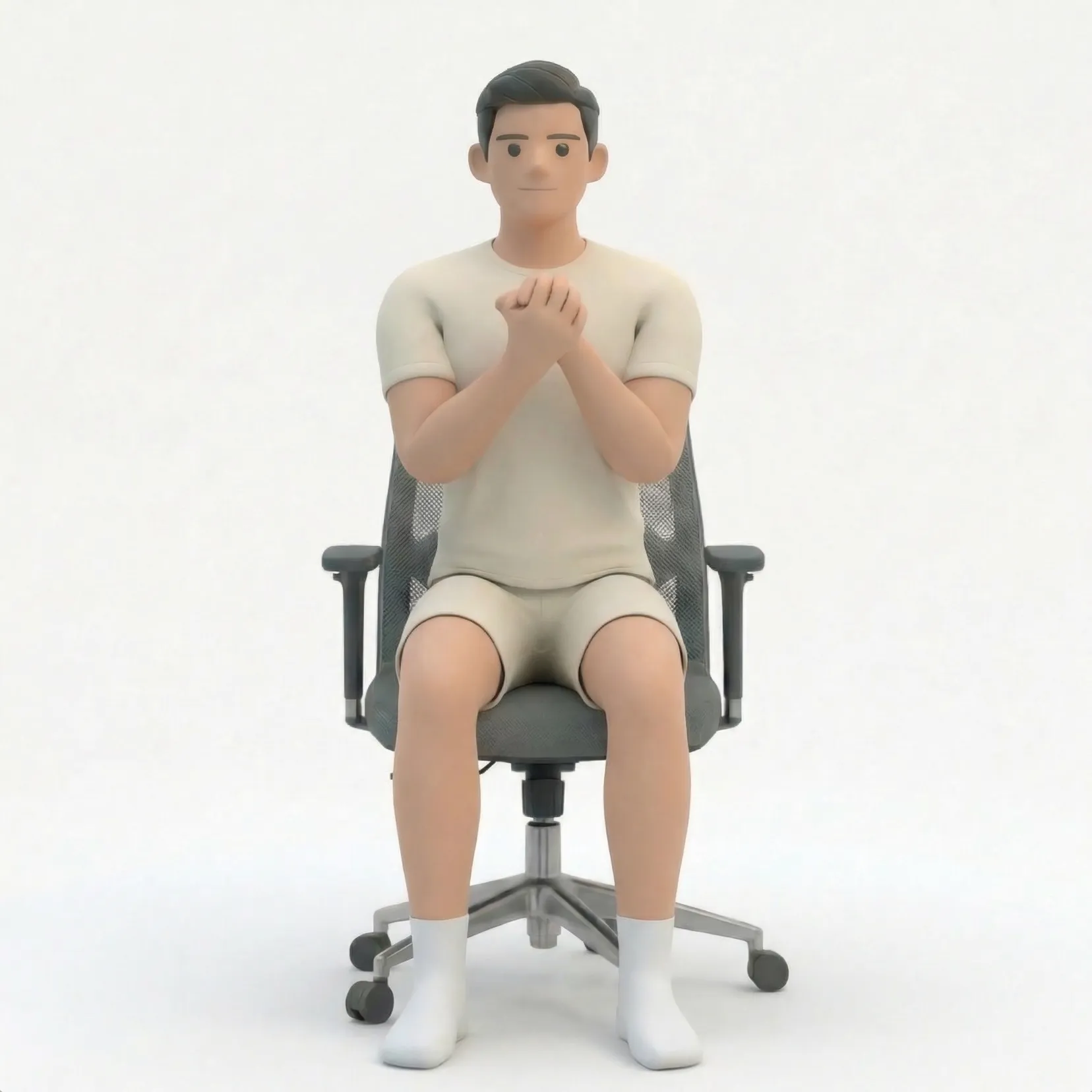
A seated wrist mobility exercise where the interlocked fingers rotate in circles to improve wrist joint range of motion and relieve forearm tension from typing.
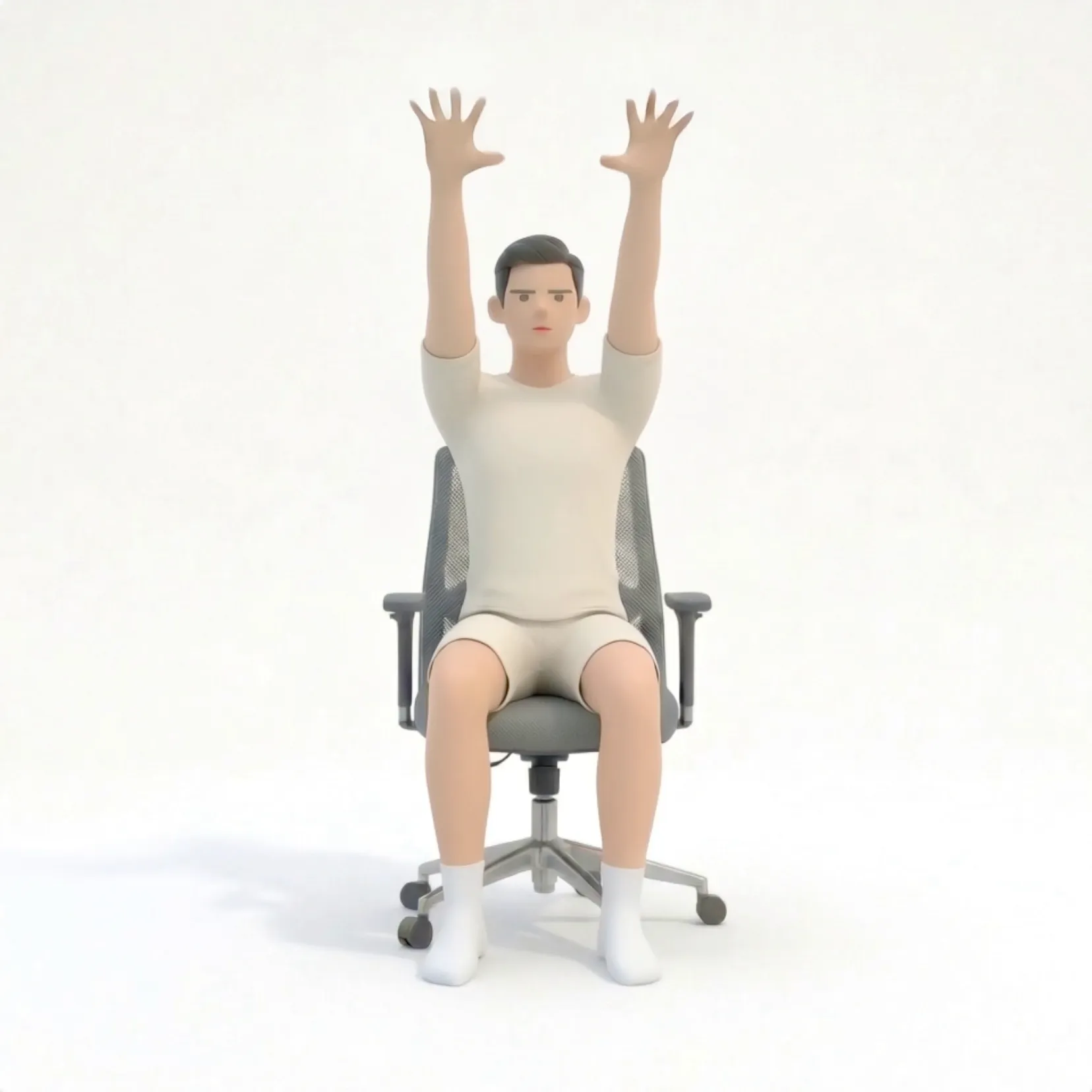
A seated hand and forearm stretch that extends the fingers wide to relieve tension from prolonged keyboard and mouse use, reducing the risk of repetitive strain.